Creating a vibrant, thriving wildflower meadow starts with proper ground preparation and sowing technique. Whether you are looking to transform a small garden patch or a larger plot, following these straightforward steps will help you achieve a stunning, natural display while giving your seeds the best possible start.
1. Prepare a Weed-Free Tilth
- Clear the area: Remove all nettles, thistles, docks, grass, and weeds using eco-friendly physical methods (hand-pulling or digging) rather than chemical sprays.
- Avoid compost: Wildflowers prefer poor to moderate soils, so do not add compost or fertiliser. If your topsoil is very fertile, consider removing the top layer or diluting it.
- Cultivate: Break up the ground to a depth of 10cm for free-draining soil, or 25cm for poorly draining or compacted soil using a fork, rotavator or plough.
- Measure up: Calculate your area size so you know how much seed you need.
2. Choose the Right Time
- Best windows: Sow during the spring months of March and April, or in August and September (nature's natural seeding time).
- Note: You can sow at other times of the year if you have a well-prepared seedbed and a reliable way to keep it watered.
3. Sowing the Seed
- Sowing rates: Use 5g/m² for mixtures containing grass (80% grass / 20% wildflower) or 2g/m² for pure 100% wildflower mixtures.
- Ensure an even spread: For small areas, mix the wildflower seeds with some fine sand in a bucket and broadcast the entire mixture evenly across the plot.
- Soil contact: Rake or harrow the area lightly after sowing to mix the seeds into the soil to a depth of approximately 0.5cm.
- Compact the bed: Roll the area or carefully press the seedbed down by foot to ensure good soil-to-seed contact without burying the seeds too deeply.
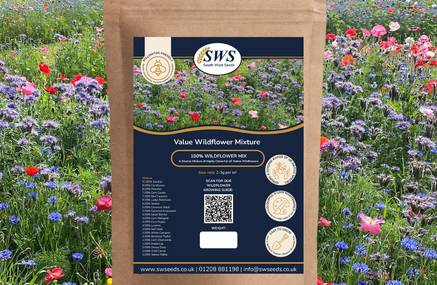
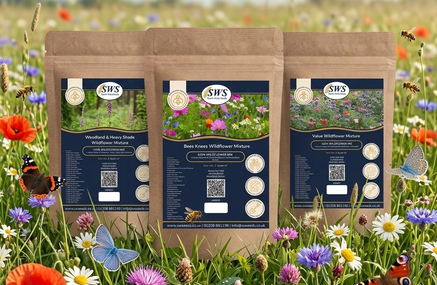
Ready to get started? Check out our full range of wildflower mixtures here!